Page not found
You may have typed the URL incorrectly.
Check to make sure you’ve got the spelling, capitalization, etc. exactly right.
What we do.
We connect 100,000+ qualified prospects looking for financial advice, lending, protection, debt help and claims to advisors and brokers every year.

What We Do
Your proven customer acquisition system that increases conversion rates at every step of the customer journey so you can enjoy record breaking sales.
Effective Lead Generation
Strategically focused on high-intent leads generation tactics from Google, Bing, & YouTube.
Database Reactivation
Turn your old data into fresh appointments and sales, utilising our sales android that never rests.
Appointment Setting
Transform your contact rate and campaign profitability with our appointment setting sales android.

Get a good impression your brand on them.
We don't launch rockets. We just generate leads from Google, Bing and YouTube, connecting them with your team in real time. And you know what, we're bloody good at it.
Create your amazing feature.
Add your ideas here.
Give more your amazing feature or ides.
Costumer review.
See why customers love GHL Elite.

"If you're looking for an all-in-one app to help you increase sales and save time on follow-ups, I would highly recommend NexLevel CRM."
– Rachel Johnson


"Our team has been using NexLevel for a few months and we are very happy with the results. We've closed more deals than ever before and our sales team loves it."
– Mike Nord

"You never know what you're missing until you try NexLevel. We've been using it for 9 months and it has helped us double our pipeline and close more deals."
– Heather Mathewson

"Since using NexLevel over a year ago, I’ve generated $300k+ in new revenue and saved more than 20 hours per week on administrative tasks like reminders and reschedules."
– Ranjana Muthaliar
Blog
Your proven customer acquisition system that increases conversion rates at every step of the customer journey so you can enjoy record breaking sales.
Impact of Bacteria on Dental Implant Success
What Poor Lead Quality Taught Us
Most marketing agencies only show you their wins. We think the more useful lessons come from the campaigns that didn't go to plan. This is one of them.
What Happened
Earlier this year, we were running a dental implant campaign for a multi-location implant practice we work with. On paper, it was performing well. Cost per lead was strong. Volume was high. Every weekly report looked good.
But the clinic wasn't feeling it. Consultations weren't filling the way the lead numbers suggested they should. When we dug into the lead-level detail, the pattern was clear: a meaningful portion of the enquiries were never going to become patients. They were interested — genuinely — but they couldn't meet the affordability criteria for treatment, and the enquiry form was letting them through anyway.
We were generating leads. We weren't generating patients.
Why It Happened
Looking back, the cause wasn't one big mistake. It was a set of small, reasonable-seeming decisions that added up.
We optimised for the wrong number.
Cost per lead was our headline metric, and the campaign was delivering it. But cost per lead says nothing about whether a lead can proceed to treatment. We were celebrating a number that didn't matter.
Our qualification was too soft.
When someone indicated they couldn't afford treatment, the form offered follow-up options — "someone can help me pay", "I'm still working" — that let them continue as if qualified. None of those answers changed the underlying problem. The form was doing what forms do when they're built to maximise volume: letting everyone in.
We reacted to anecdotes before we measured the base rate.
The first unqualified leads looked like a crisis, and the temptation was to tear the campaign down that day. Instead, we measured: across every lead from that channel, what percentage actually hit the same wall? That number — not three frustrating enquiries — is what told us the form needed rebuilding, and it's what stopped us from killing an ad that was still producing genuinely qualified patients underneath the noise.
What We Learned
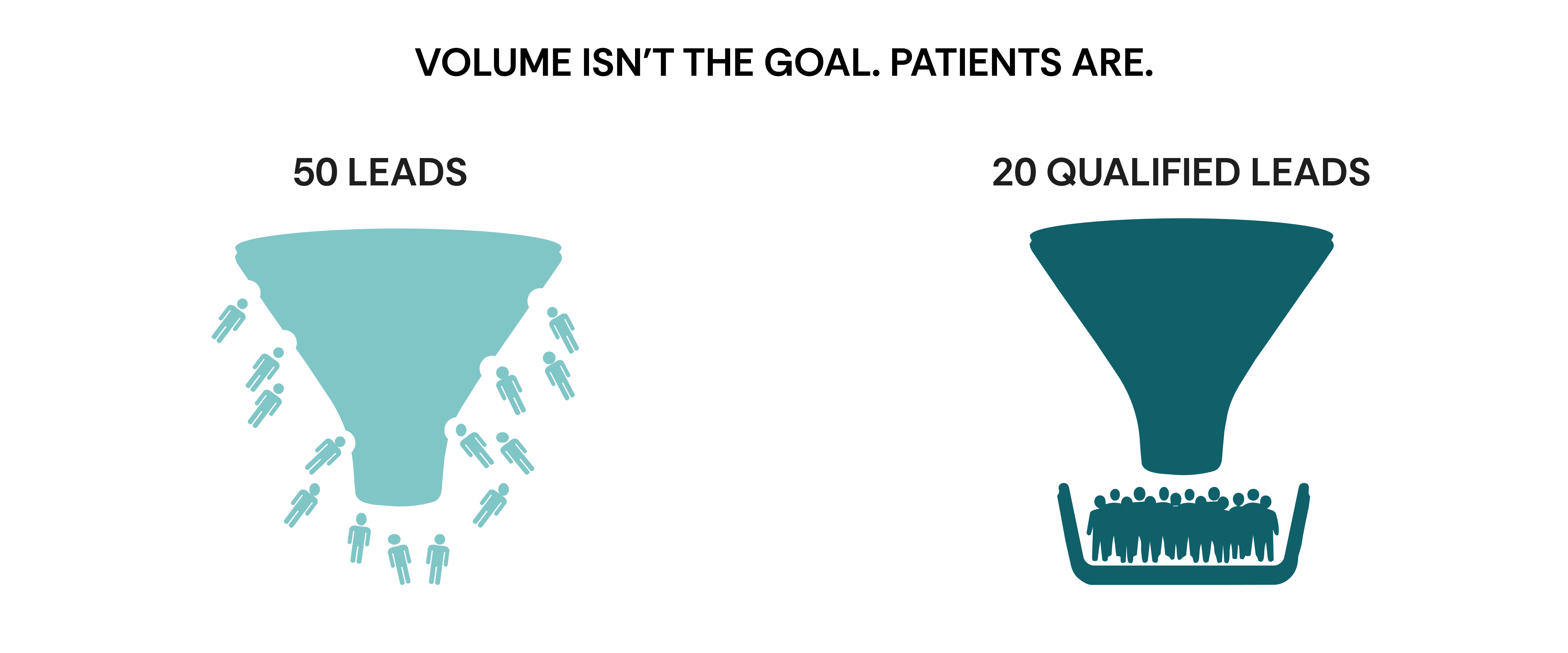
The lesson sounds obvious in hindsight, but it changed how we operate: lead volume is a vanity metric if the leads can't convert. A campaign generating 50 unqualified leads is worse than one generating 20 qualified ones — worse for the clinic's time, worse for the call team's morale, and worse for the patient experience.
We also learned that the earliest warning sign of a lead quality problem isn't in the ad account. It's in the conversations the clinic is having. If the front desk is frustrated, something upstream is wrong.
What We Changed
1. We rebuilt qualification. Answers that indicate treatment genuinely can't proceed are now terminal — they route to a nurture path instead of the clinic's call list. Key financial questions can no longer be skipped. This reduced raw lead volume. It was the right trade.
2. We changed the headline metric. Internally, we now judge campaigns on cost per booked consultation and attendance — not cost per lead alone.
3. We built a feedback loop with the clinic. Weekly check-ins now include the clinic's qualitative read on lead quality, reviewed alongside the numbers. The front desk's instinct gets treated as a signal, not an anecdote.
How We Approach It Today
Today, when a campaign's lead volume climbs, our first question isn't "how do we scale it?" It's "are these the right leads?" That instinct came directly from this experience.
We share this not to assign blame — to the campaign, the clinic, or ourselves — but because it's the honest answer to how good results are built: through testing, mistakes, and changing what doesn't work.
If you run an implant-focused practice and you're generating leads that don't become patients, this pattern will feel familiar. We're happy to walk you through how we qualify now — reach out and we'll show you.